Microsoft Dynamics implementation steps
Dynamics 365 is a powerful and user-friendly ERP and CRM platform, but its success hinges on a carefully crafted implementation.
ERP and CRM platform implementation can be complex, not only due to technical knowledge of Dynamics 365 itself, but also and especially due to the required expertise in business processes, the sector and change management. It also takes a sound approach that is custom-tailored to your organization and rooted in best practices. Our ERP project approach has proven itself time and again: we have supported various (kinds of) companies in their digital transformation, both nationally and internationally.
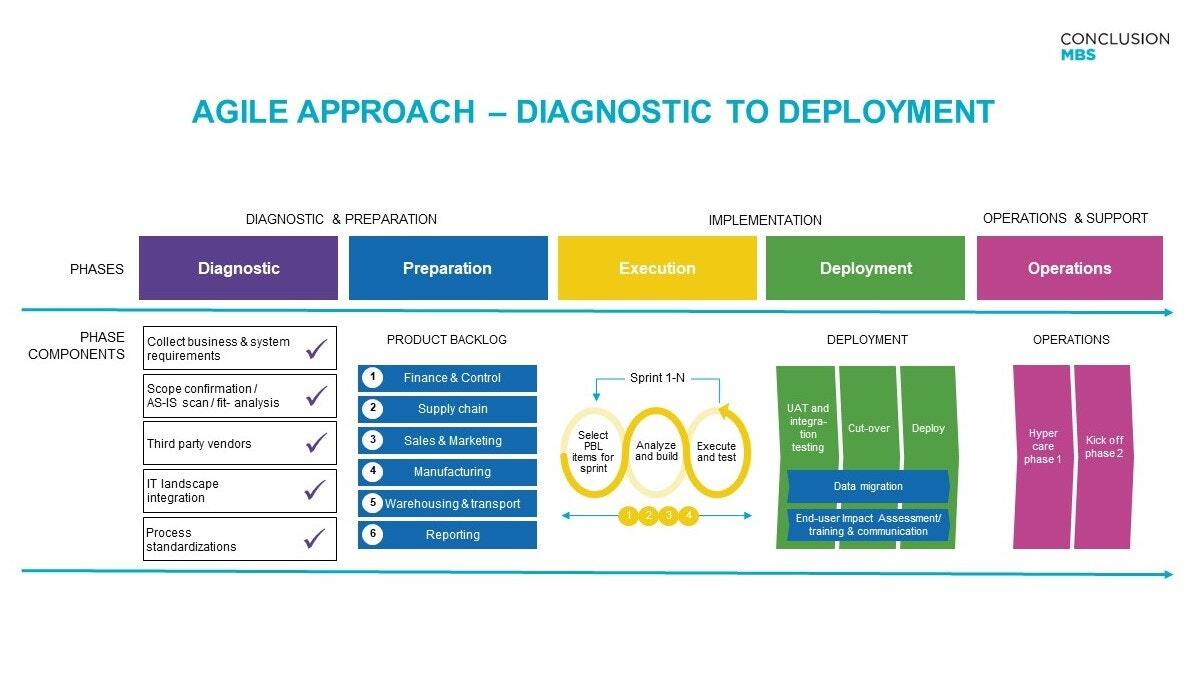
Om een goede implementatie van Dynamics 365 te garanderen, dient een gedegen ERP-projectaanpak gevolgd te worden. Daarbij hanteren we – in principe – het volgende stappenplan:
Implementation starts with gaining a thorough understanding of the client and their business needs, followed by a quick scan of the current IT environment. We then gather requirements based on interviews with stakeholders, to determine all of the specifications for the desired solution. We use all of the gathered information and intelligence to create a blueprint of the new solution.
This phase further refines the gathered requirements and draws up a product backlog. This serves as the basis for the Agile development process. Next we set up the technical environment where the Dynamics 365 solution will run.
In this phase, scrum teams work together in sprints to design and develop a Dynamics 365 solution that meets all the requirements. Every team member brings their own unique skills and expertise to the table to create the best possible solution.
This phase is the actual implementation of the designed Dynamics 365 solution, including data migration. Naturally implementation includes rollout of the solution. But it also involves a series of tests, such as the user acceptance, system integration, and performance tests. This guarantees that the solution meets all the requirements. In this phase, we also train end users to perform their day-to-day tasks in the new system.
After the green light in the operation phase, the Dynamics 365 solution goes live. The go-live involves a period of intensive onsite support (“hypercare”) and a transition to managed services. This is also the time for any additional implementations, such as add-ons or Power Platform solutions. Naturally it is also when we transfer the system to the client’s IT department.
In the implementation of Microsoft Dynamics 365 in your organization, we always look before we leap. It’s a major project with a clear start and a clear end. A project that’s about more than just technology and processes. Above all, it’s about people. This requires a sound and professional approach. And that’s precisely what we offer at Conclusion MBS. We’ve been working with our successful approach for years, and it’s proven itself in numerous projects – both large and small.
Various employees at Conclusion MBS have experience in the business side. They know better than anyone how the processes all fit together. Knowledge is the basis of the project approach, along with our experience gained from past projects.
After the implementation, we can’t just rest on our laurels, and neither can you. Once the hypercare period, which can last up to 6 weeks, is behind us, you have a brand-new platform that everyone understands well (enough). To ensure that Dynamics 365 continues to meet all your needs and desires, runs optimally and doesn’t cause problems for end users, we offer managed services.
With our managed services, you can access 24/7 custom solutions, end user support and optimal performance. Some examples here would be support, service requests, health monitoring, and periodic functional and/or architectural consulting. Our managed services ensure that your business processes continue to run optimally.
Implementing Microsoft Dynamics 365 as an ERP and/or CRM system offer countless benefits. Basically it lets you automate and optimize your business processes, providing you with current and even predictive insights. Thanks to these data and analyses, you can work smarter and faster, make better decisions, reduce the number of errors as well as the amount of duplicate work, improve customer satisfaction and boost innovation.
Unfortunately there is no magic formula for successful ERP system implementation. We can however note several best practices and points for attention, such as; Start planning early, Change management: (involve all stakeholders early on, and use constant, interactive communication over multiple channels), Set up a shared governance model, Clearly specify who is responsible for what (such as for strategic and operational decisions, project management, budgetary matters, etc), Ensure effective management based on just-in-time decision making, Never take shortcuts on stakeholder management, Never forget that the “people” and “processes” aspects are usually trickier than the “technology” aspect, Train your key users.

What are the benefits of a Microsoft Dynamics implementation?
Implementing Microsoft Dynamics 365 as an ERP and/or CRM system offer countless benefits. Basically it lets you automate and optimize your business processes, providing you with current and even predictive insights. Thanks to these data and analyses, you can work smarter and faster, make better decisions, reduce the number of errors as well as the amount of duplicate work, improve customer satisfaction and boost innovation.
How should you implement an ERP system?
Unfortunately there is no magic formula for successful ERP system implementation. We can however note several best practices and points for attention, such as; Start planning early, Change management: (involve all stakeholders early on, and use constant, interactive communication over multiple channels), Set up a shared governance model, Clearly specify who is responsible for what (such as for strategic and operational decisions, project management, budgetary matters, etc), Ensure effective management based on just-in-time decision making, Never take shortcuts on stakeholder management, Never forget that the “people” and “processes” aspects are usually trickier than the “technology” aspect, Train your key users.
How long does a Dynamics 365 implementation project take?
What does a Microsoft Dynamics implementation cost?
Contact us, we'd love to talk.